Browser-Based Space Online Strategy

«Survival is not a competition. It is the art of coexistence in the cold void of space»

About the Game

Founders Online II is a browser-based space RTS in the science fiction genre, where tactics matter more than brute force. This is not a sequel, but a spiritual evolution of the ideas from the original Founders Online.

Unique Philosophy

«My home is my fortress!» — civilizations are protected from total annihilation
Diplomacy above aggression — you can blockade, besiege, but not destroy
«Live and let live» — the foundation of player interaction
Ambushes instead of direct attacks — peaceful ships are protected from direct assaults, but can fall into ambushes

Key Features

Full ship customization — choose hulls, components, create unique designs
8 playable races + 2 NPC factions — each with unique technology and suitable planets
Alliance formation — for mutual aid and enhanced diplomacy
Materials — for constructing buildings, ships, and production
Deuterium — fuel for the fleet
Local currency — for research
Imperial credits — for in-game trading
PvP and PvE combat only in space
Unified research base for all empire planets

Playable Races

Terrans, Thalassians, Cryoliths, Sulfurians, Streamers, Fissures, Halogenes, Silikari (more details in the tabs below)

NPC Factions

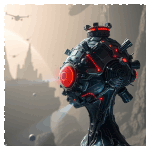
Overseers — autonomous guardians of the Ancients
Unspoken — a mistake of the Precursors

Technical Information

Status: Pre-alpha
Platform: Browser
Monetization: Imperial credits purchase only — no pay-to-win
Inspiration: Nemexia, OGame, Founders Online
Terrans

Biology and Physiology

Oxygen-based respiration, carbon foundation
Comfortable temperature range: -30°C to +45°C
Dependence on liquid water and protein-rich food
Height: 1.5–2.2 m
Skin: full color spectrum (including genetically modified variants)
Eyes: all natural and artificial colors (including synthetic patterns)
Distinctive features:
40% of the population have visible cybernetic implants
Adaptive bone density for gravity 0.8–1.2G
Neural implants are standard among 78% of adults

Culture and Society

Technological civilization with a diversified economy
Politically fragmented (nation-states)
Expansionist culture emphasizing individualism
Fashion: smart fabrics with nanotexture
Bioluminescent tattoos showing social status
Foldable exo-accessories

Unique Adaptation

Ability to survive in a wide gravity range (0.8–1.2g) due to bone-muscle plasticity.

Architecture

Fractal orbital stations
Terraforming spires on colonial worlds

Art

Quantum sculptures
Neuro-performances

Race bonuses

+8.5%
Ship Construction Speed Bonus
Decreases the time required to construct spaceships at shipyards.
+15%
Ship Module Capacity Bonus
Increases the number of slots for installing modules on the ships.
+15%
Local Currency Bonus
Affects the income from local taxes on the planets of the race.
+15%
Ship Hull Integrity Bonus
Increases the base hull strength through a more rational construction.

Disadvantages of race

-25%
Ship Economy Penalty
Increases the material cost of constructing spaceships.
-25%
Building Economy Penalty
Increases the material cost of constructing and upgrading buildings.

Habitable planets

Terran Planet
Terran Planet

A terran-type planet with moderate climate, oxygen-nitrogen atmosphere and diverse biosphere. Ideal for humans and humanoid races.

AtmosphereOxygen-nitrogen
GravityNormal (0.8–1.2G)
SurfaceContinents, oceans, forests, mountains
Thalassians

Biology and Physiology

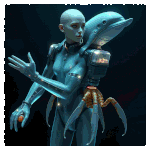
Amphibiotic beings with bioluminescent organs
Three-chambered heart, skin respiration complements gill breathing
Photosynthetic symbiotic microflora
Type: Amphibiotic humanoids
Height: 1.8–2.5 m (with fin membranes)
Skin: pearly-blue with iridescent turquoise patterns
Eyes: large, lidless (vertical pupils), spectrum vision
Gills on the neck (6 slits with blue-violet glow)
Retractable claws on webbed limbs
Luminous photophores along the spine for communication

Culture and Society

Cities made of bio-generated coral-like material
Matriarchal clans governed by «Sea Matrons»
Economy based on controlling currents and mineral «smokestacks»
Genetic memory stored in seawater

Architecture

Bio-coral cities
Mobile domes for land missions

Technology

Whale carriers with neural interfaces
Sonic tools for terraforming

Art

Bioluminescent dance performances
Living sculptures from symbiotic algae

Race bonuses

+20%
Ship Mass Bonus
Reduces the total mass of the ship, which increases its speed, maneuverability, and initiative in combat.
+25%
Ship Cargo Capacity Bonus
Increases the base capacity of the cargo bays of the ships.
+15%
Deuterium Mining Bonus
Increases the speed of deuterium mining on the planets and in the asteroid fields of the race.
+22%
Storage Capacity Bonus
Increases the maximum storage volume for resources on the planets.

Disadvantages of race

-20%
Ship Construction Speed Penalty
Increases the time required to construct spaceships at shipyards.
-20%
Building Speed Penalty
Increases the time required to construct and upgrade buildings on the planets.

Habitable planets

Oceanic World
Oceanic World

A global ocean covers the entire surface. Rare volcanic islands serve as bases. Suitable for amphibians and aquatic civilizations.

AtmosphereWater vapor + oxygen
GravityLow (0.6–0.9G)
Surface95% water, scattered islands, deep trenches
Cryoliths

Biology and Physiology

Silicon-carbon hybrids with liquid methane as blood
Body temperature: -180°C
Metabolism based on catalytic reactions with platinum-group elements
Type: Methane-based silicon extremophiles
Height: 2.0–3.5 m (low-gravity adaptation)
Coverings: hydrocarbon-chain crystalline «skin» (bluish with orange inclusions)
Internal methane rivers at 15 atm pressure
Adaptations: radar membranes on head (1–50 kHz range)
360° IR vision (-200°C to +50°C)
Anabiosis at -200°C (body crystallization)

Culture and Society

«Ice Networks» — hive-like colonies with collective consciousness
Religion centered around «Great Fissures» (geothermal sources)
Trade in methane isotopes and ethane crystals
Capable of multi-century anabiosis when temperatures drop below -200°C

Architecture

Fractal ice cities with nitrogen streams
Domes made of reinforced methane ice

Technology

Plasma drills for tunneling
Cryogenic computers using superfluid helium

Art

Sculptures from eternal ice
«Pressure dances» in methane lakes

Race bonuses

+15%
Ship Cargo Capacity Bonus
Increases the base capacity of the cargo bays of the ships.
+9%
Ship Construction Speed Bonus
Decreases the time required to construct spaceships at shipyards.
+9%
Module Production Speed Bonus
Accelerates the production of equipment modules at specialized factories.
+15%
Storage Capacity Bonus
Increases the maximum storage volume for resources on the planets.

Disadvantages of race

-15%
Deuterium Mining Penalty
Reduces the speed of deuterium mining on the planets and in the asteroid fields of the race.
-15%
Material Mining Penalty
Reduces the speed of material mining on the planets of the race.

Habitable planets

Methane Ice World
Methane Ice World

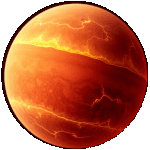
Cold world with methane-rich atmosphere and icy crust. Temperature below -180°C. Inhabitable only by silicon-based cryogenic lifeforms.

AtmosphereMethane-nitrogen
GravityVery low (0.4–0.7G)
SurfaceIcy plains, liquid methane rivers
Sulfurians

Biology and Physiology

Chemosynthetic organisms with sulfur-based «blood»
Skin made of sulfide polymers, resistant to acids
Reproduction via crystalline spores
Type: Chemosynthetic hydrogen sulfide lifeforms
Height: 1.2–1.8 m (low body profile)
Coverings: layered sulfide plates (dark brown to reddish-brown)
Acid-resistant membranes (pH 0–1 tolerance)
Metabolism: CO₂ + H₂S → organic compounds + sulfur (at 115°C), excretion of molten sulfur through pores
Senses: thermal tentacles (50–500°C), 4 eyes with quartz lenses (IR/UV spectrum)

Culture and Society

Nomadic «Caravans» following volcanic eruptions
Cult of the «Great Oxidation» — historical memory of vanished oceans
Wars for control over sulfur geothermal zones
Capable of processing heavy metals in biological reactors

Architecture

Basaltic cities with sulfur «arteries»
Pressure domes (90 atm, CO₂ atmosphere)

Technology

Plasma acid cleaners
Volcanic drilling rigs

Art

Acid etching on titanium
«Dance rituals» in sulfur thermal springs

Race bonuses

+9%
Ship Economy Bonus
Reduces the material cost of constructing spaceships.
+5.5%
Building Speed Bonus
Reduces the time required to construct and upgrade buildings on the planets.
+10%
Material Mining Bonus
Increases the speed of material mining on the planets of the race.
+9.5%
Building Economy Bonus
Reduces the material cost of constructing and upgrading buildings.

Disadvantages of race

-20%
Ship Cargo Capacity Penalty
Decreases the base capacity of the cargo bays of the ships.
-20%
Storage Capacity Penalty
Decreases the maximum storage volume for resources on the planets.

Habitable planets

CO₂ Desert
CO₂ Desert

Hot planet with dense CO₂ atmosphere and extreme temperatures. Only habitable by sulfur-based photosynthetic organisms.

AtmosphereCarbon dioxide, possible sulfuric acid clouds
GravityNormal (0.9–1.1G)
SurfaceRocky deserts, canyons, active volcanoes
Streamers

Biology and Physiology

Atmospheric colonies of gaseous-plasma lifeforms
Bodies made of ionized ammonia within magnetic containment
Feeds via photosynthesis and quantum tunneling
Type: Plasma-gas based lifeforms
Shape: amorphous clouds of ionized gas (2–5 m diameter)
Superdense metallic hydrogen core with reflective surface
Metabolism: absorbs radio waves and magnetic energy
Reproduction through plasma cluster division
11-dimensional quantum sensors
Communication via plasma polarization

Culture and Society

«Singing Vortices» — communication through radio frequency pulses
Nomadic culture drifting between storm belts
Quantum state trading as currency
Capable of forming temporary solid structures via controlled condensation

Architecture

Floating cities from frozen plasma
Mobile stations on magnetic vortices

Technology

Tornado-shaped ships
Quantum vortex computers

Art

Sculptures made from frozen lightning
Magnetic field «dance» performances

Race bonuses

+10%
Ship Module Capacity Bonus
Increases the number of slots for installing modules on the ships.
+5%
Deuterium Mining Bonus
Increases the speed of deuterium mining on the planets and in the asteroid fields of the race.
+11%
Research Speed Bonus
Accelerates the study of new technologies in the research tree.
+15%
Research Economy Bonus
Reduces the cost (in local currency) of studying new technologies.

Disadvantages of race

-20%
Ship Mass Penalty
Increases the total mass of the ship, which reduces its speed, maneuverability, and initiative in combat.
-20%
Ship Hull Integrity Penalty
Reduces the base hull strength due to flaws in its construction.

Habitable planets

Ammonia Gas Giant
Ammonia Gas Giant

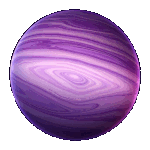
Gas giant without solid surface. Upper layers rich in ammonia. Habitable only for energy-based beings and floating colonies.

AtmosphereAmmonia, helium, hydrogen
GravityVery high (> 2.5G)
SurfaceNo solid surface
Fissures

Biology and Physiology

Radiotrophic beings with lead-based «bones»
DNA-reduplication via gamma radiation
Cell membranes made of graphene nanotubes
Type: Radiotrophic heavy organisms
Skeletal structure: lead-uranium alloy (15 g/cm³)
Skin: graphene nanotubes with thorium (atomic green tint)
Circulatory system: mercury-plutonium liquid alloy (glows blue)
Metabolism: absorption of 1 rad/sec = 1 «calorie»
Reproduction: nuclear fission (1 organism → 2–3 after 50–70 years)
Senses: gamma-ray spectrometers on facial plate
Neutrino navigation sensors

Culture and Society

Underground «Reactor Cities» built around uranium veins
Caste system based on radiation resistance level
Religion centered on nuclear fusion as an act of creation
Use radioactive isotopes for information storage (half-life = data retention period)

Architecture

Reactor-temples from depleted uranium
Liquid metal rivers as transport arteries

Technology

Pulse nuclear engines
Neutron-absorbing ceramics

Race bonuses

+10%
Ship Economy Bonus
Reduces the material cost of constructing spaceships.
+4.5%
Building Speed Bonus
Reduces the time required to construct and upgrade buildings on the planets.
+5%
Module Economy Bonus
Reduces the cost (in materials and local currency) of producing modules.
+10%
Research Speed Bonus
Accelerates the study of new technologies in the research tree.

Disadvantages of race

-20%
Local Currency Penalty
Reduces the income from local taxes on the planets of the race.
-20%
Research Economy Penalty
Increases the cost (in local currency) of studying new technologies.

Habitable planets

Radioactive Hell
Radioactive Hell

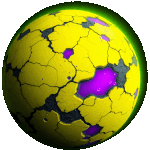
Planet with radioactive crust, fissures and nuclear storms. Suitable only for extremophiles with nuclear metabolism.

AtmosphereSulfur compounds, ionized particles
GravityHigh (1.2–1.5G)
SurfaceMolten metals, acid rain
Halogenes

Biology and Physiology

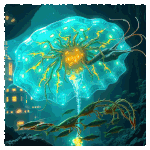
Chlorine-bromine medusoid lifeforms
Liquid-crystal tissues with ionic conductivity
Reproduction through electrolytic division
Type: Electrolytic chlorine-based lifeforms
Body: semi-transparent medusoid bodies 2–3 m in diameter
Liquid crystal structure with ion channels
Metabolism: electrolysis of salt water (2NaCl + 2H₂O → 2NaOH + H₂ + Cl₂)
Feeding: direct absorption of metal ions
Senses: electrosensors (sensitivity down to 0.001V)
Chemoreceptive tentacles

Culture and Society

Floating «Salt Megacities» made from evaporated NaCl
Democracy of currents — decisions based on medium conductivity
Trade in rare halides as precious gems
Capable of forming temporary solid structures via controlled crystallization

Architecture

Self-repairing electropolymer reefs
Ocean current-powered stations

Technology

Membrane bio-electric computers
Ion-plasma engines

Art

Living electric paintings
«Dance of ion flows»

Race bonuses

+25%
Ship Mass Bonus
Reduces the total mass of the ship, which increases its speed, maneuverability, and initiative in combat.
+10%
Local Currency Bonus
Affects the income from local taxes on the planets of the race.
+20%
Module Economy Bonus
Reduces the cost (in materials and local currency) of producing modules.
+12.5%
Research Economy Bonus
Reduces the cost (in local currency) of studying new technologies.

Disadvantages of race

-20%
Ship Module Capacity Penalty
Decreases the number of slots for installing modules on the ships.
-20%
Module Production Speed Penalty
Slows down the production of equipment modules at specialized factories.

Habitable planets

Chlorine Ocean
Chlorine Ocean

Planet with deep oceans under toxic chlorine fog. Suitable for halogen-based and crystalline lifeforms.

AtmosphereChlorine, oxygen
GravityLow (0.6–0.8G)
SurfaceSalty ocean, no landmasses
Silikari

Biology and Physiology

Photosynthetic crystalline lifeforms
Slow metabolism (1 thought per hour)
Communication via light polarization
Type: Silicon-based photosynthetic beings
Structure: geometrically perfect crystals 1.5–3 m high
Composition: organic silicon with rare-earth elements
Color: translucent smoky with rainbow iridescence
Metabolism: IR photosynthesis (heat → energy)
Reproduction: crystal budding
Senses: prism vision (full spectral analysis)
Light communication through photon polarization

Culture and Society

«Prism Gardens» — static crystal cities
Philosophy of «Millennial Reflection»
Wars fought by altering refraction coefficients
Capable of focusing sunlight into destructive laser pulses

Architecture

Fractal crystalline cities
Acoustically perfect living chambers

Technology

Diamond photonic computers
Levitating platforms using light pressure

Art

Atomic-level laser etching
«Dance of refracted light»

Race bonuses

+14%
Module Production Speed Bonus
Accelerates the production of equipment modules at specialized factories.
+10%
Material Mining Bonus
Increases the speed of material mining on the planets of the race.
+25%
Ship Hull Integrity Bonus
Increases the base hull strength through a more rational construction.
+15%
Building Economy Bonus
Reduces the material cost of constructing and upgrading buildings.

Disadvantages of race

-25%
Module Economy Penalty
Increases the cost (in materials and local currency) of producing modules.
-25%
Research Speed Penalty
Slows down the study of new technologies in the research tree.

Habitable planets

Silicate Desert
Silicate Desert

Dry, hot desert planet made of molten sand. Survivable only by light-absorbing crystalline lifeforms.

AtmosphereThin, dusty atmosphere
GravityNormal (0.8–1.1G)
SurfaceGlassy plains, sand dunes, thermal plateaus
Overseers

Origin

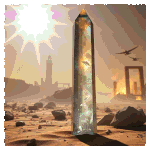
Created by the Vanished Ancients as autonomous keepers of galactic balance
Do not live — do not die. Immune to time.
Communicate with other lifeforms only via holographic projections

Motivation

Preserving balance: do not interfere in wars between species, destroy any race approaching singularity-level tech (black holes, time manipulation)
Archiving: collect data on all civilizations, never share it. Possibly waiting for someone (return of the Ancients?)
Final order: if a species finds the Activation Key — must transfer all Ancient technology. But no one knows where it is

Appearance

Shape: shifting geometry — from humanoid to fractal forms
Material: self-healing metal with quantum memory
Aura: static discharges warping space («shimmering air» effect)

Technology

Ships: seamless black cubes capable of null-space teleportation

Behavior

Contacts only through holograms
In-game behavior: appear only in restricted zones (Ancient ruins, black holes)
Attack if player uses forbidden tech
Can drop Ancient artifacts after defeat

High chance of detection

Dead world
Dead world

A dead world with no atmosphere or activity. May be result of ancient cataclysm or age. Occasionally contains rare minerals or artifacts.

AtmosphereNone
GravityVaries
SurfaceCracked surface, craters, rocky debris
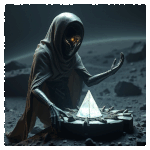
Unspoken

Origin

A mistake of the Ancients — their final experiment before disappearance
Meant to exist outside time, but something went wrong
Byproduct of failed creation

Motivation

They do not live — they copy: no culture, no tech, no goals of their own. Steal and distort others.
Hunters of knowledge: only goal — collect artifacts of the Ancients. Possibly to «fix» themselves.
Fear the Overseers: disappear instantly when Cyber presence is detected.

Appearance

Height: 0.8–1.2 m
Cloaks made of metamaterial that absorbs scans
Masks with cracked mirror pattern
After death: body turns into black nanopowder in 3.7 seconds

Ships and Tactics

Ships: biomechanical «cocoons», disguised as asteroids
Steal tech, never use directly
Leave «sacrificial circles» of Ancient artifacts

In-game Behavior

Appear in asteroid fields (25% chance)
Do not attack first
If provoked — deploy stolen weapons (replica of Ancient tech at 30% efficiency)
May drop an artifact on defeat (rare)

Mystique

Rumors: their cloaks are last fragments of the Ancients reality
Masks hide emptiness where a face should be
«They whisper numbers before disintegration… matching coordinates of fallen civilizations»

High chance of detection

Asteroid Belt
Asteroid Belt

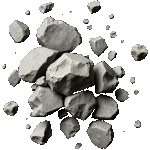
A debris field filled with rock fragments. Rich in resources, uninhabitable.

AtmosphereNone
GravityMinimal (<0.1G)
SurfaceN/A